
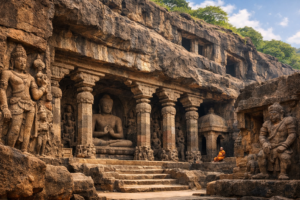

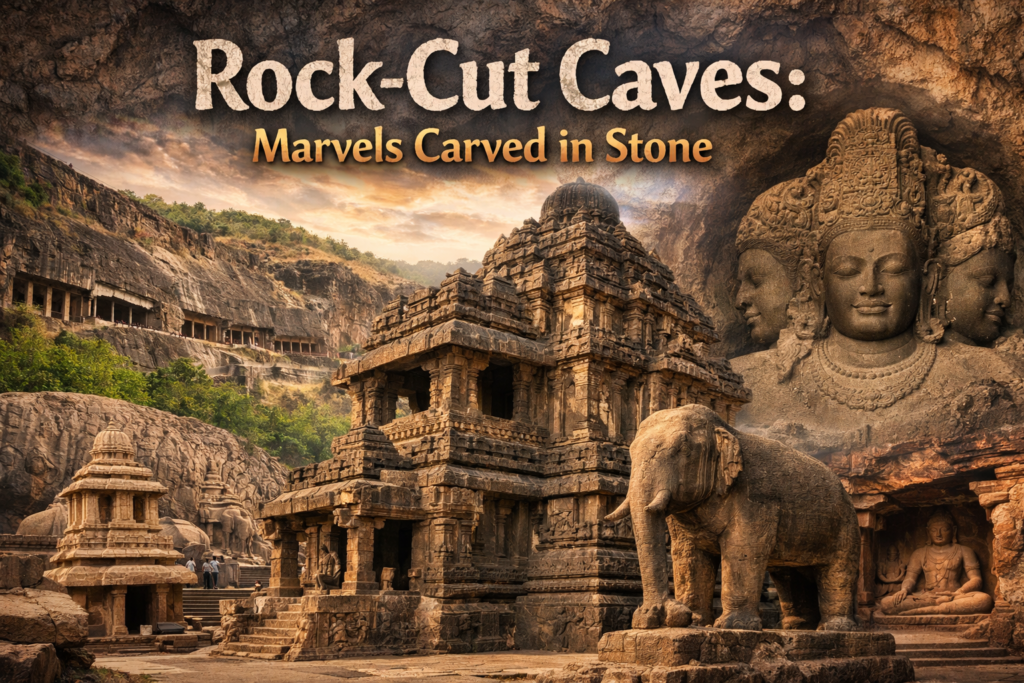
Rock-cut caves served as important centers of worship, learning, and meditation in ancient India. Monks and scholars actively used these spaces to practice religion and share knowledge. Over time, these caves also helped spread spiritual teachings across society. Moreover, artisans carefully carved detailed sculptures, pillars, and murals on the cave walls. These artworks clearly reflect religious beliefs, daily life, and cultural values of the period. As a result, rock-cut caves offer valuable insights into ancient traditions and lifestyles.
What Are Rock-Cut Caves?
Rock-cut caves are man-made spaces carved from natural rock formations. Unlike buildings, people do not use bricks to create them. Instead, craftsmen remove rock to shape halls, pillars, and sculptures. As a result, these caves remain extremely strong and durable.
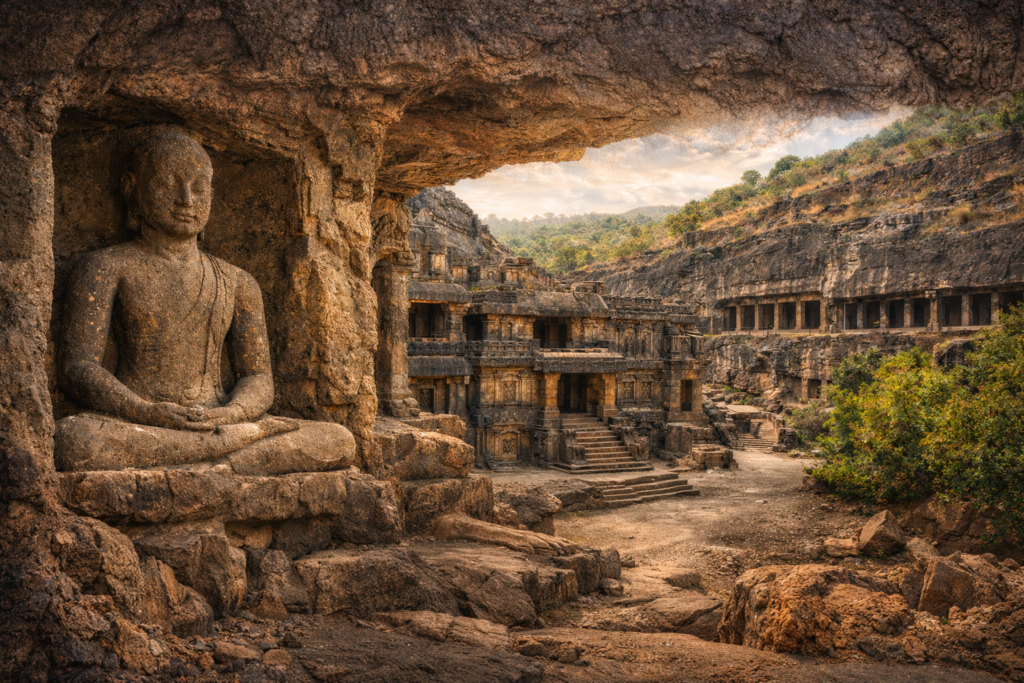
These caves were primarily created for:
- Religious rituals and worship
- Meditation halls and monasteries
- Living quarters for monks
- Teaching centers for philosophy and scriptures
- Cultural and educational activities
- Monasteries and meditation halls
Evolution and History of Rock-Cut Architecture
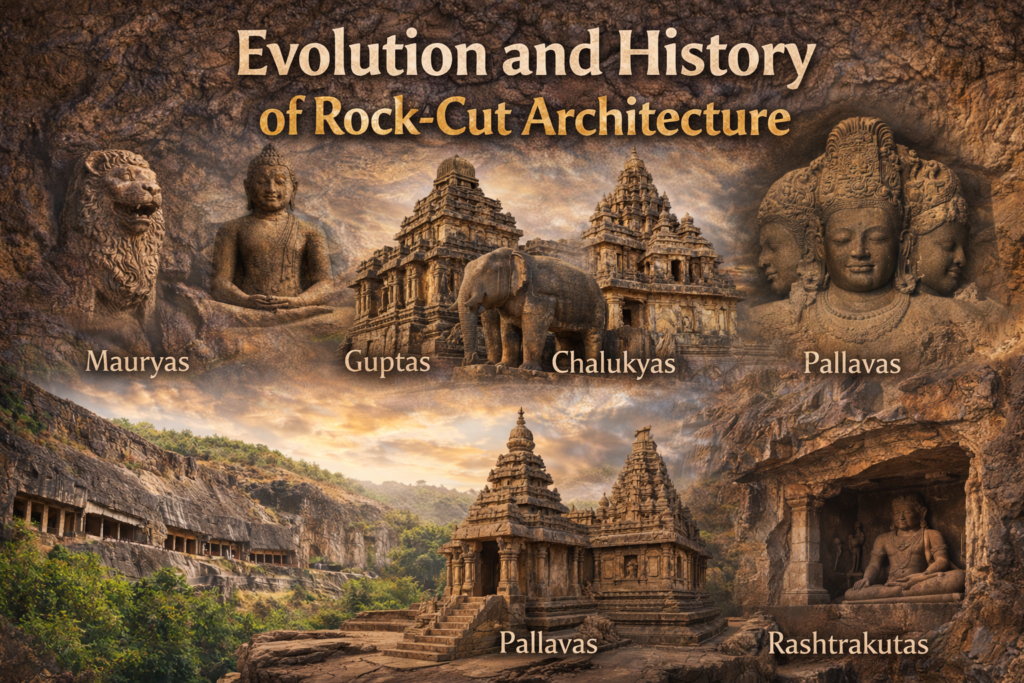
The tradition of rock-cut architecture began in India around the 3rd century BCE, especially during the Mauryan period. Over time, different dynasties developed this architectural style and added unique artistic features. Initially, Buddhism played a key role because monks needed quiet and secluded spaces for meditation. Later, Hindu and Jain rulers adopted this tradition and expanded it further. As a result, artisans created grand temples carved from a single rock. Moreover, dynasties such as the Guptas, Chalukyas, Pallavas, and Rashtrakutas refined this art form. Overall, the shift from simple caves to complex temples shows clear progress in engineering, art, and religious expression.
Famous Rock-Cut Caves in India
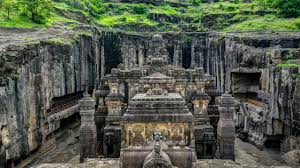
The Ajanta Caves are world-renowned for their stunning murals and sculptures. These artworks depict stories from Buddha’s life and his earlier births. As a result, the paintings stand as masterpieces of ancient Indian art. Moreover, the caves clearly show the close connection between art and religion in ancient times. Artists used advanced techniques in shading, expression, and storytelling to bring these scenes to life. Therefore, the Ajanta Caves provide deep insight into early Buddhist culture, art, and architecture. Today, UNESCO recognizes the site as a World Heritage Site for its outstanding historical value.
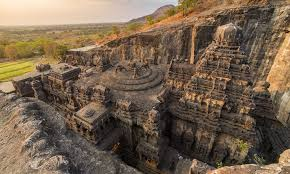
Ellora Caves in Maharashtra rank among India’s most remarkable UNESCO World Heritage Sites. They lie near Chhatrapati Sambhajinagar (Aurangabad). Between the 6th and 10th centuries AD, artisans carved 34 rock-cut caves at this site. Notably, these caves represent Buddhism, Hinduism, and Jainism, which highlights India’s long tradition of religious harmony. Moreover, the caves feature stunning sculptures, detailed carvings, and advanced rock-cut engineering. Most importantly, the Kailasa Temple (Cave 16) stands as a masterpiece carved from a single massive rock. Overall, the Ellora Caves reflect the artistic excellence and architectural brilliance of ancient India. Therefore, they attract history lovers, art enthusiasts, and travelers from around the world.
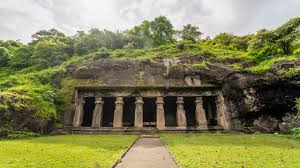
Elephanta Caves in Mumbai are a renowned UNESCO World Heritage Site. They are located on Elephanta Island in Mumbai Harbour. Dating from the 5th to the 8th centuries AD, artisans carved these rock-cut caves mainly in honor of Lord Shiva. Moreover, the caves are famous for their impressive stone sculptures and intricate carvings. Most notably, the colossal Trimurti stands out as a three-faced representation of Shiva. It symbolizes creation, preservation, and destruction. Carved from solid basalt rock, the caves showcase the artistic mastery and spiritual depth of ancient Indian craftsmen. Surrounded by greenery and the sea, Elephanta Caves offer a unique blend of history, art, and serenity. Therefore, they remain one of Mumbai’s most important cultural and tourist landmarks.
Mahabalipuram Rock-Cut Temples (Tamil Nadu)
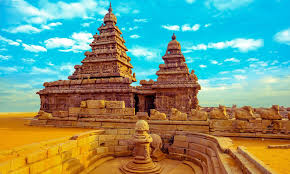
Mahabalipuram Rock-Cut Temples in Tamil Nadu, also known as Mamallapuram, form a magnificent UNESCO World Heritage Site along the Coromandel Coast. During the 7th and 8th centuries, the Pallava dynasty built these rock-cut monuments. As a result, the site showcases the early Dravidian style of temple architecture. Moreover, Mahabalipuram is famous for its monolithic rathas, cave temples, and detailed stone carvings. Most notably, the relief Descent of the Ganges (Arjuna’s Penance) stands out as one of the largest open-air rock carvings in the world. Carved from granite rock, these temples reflect exceptional craftsmanship, mythological storytelling, and architectural innovation. Therefore, Mahabalipuram remains a treasured symbol of South Indian heritage and a must-visit destination for history and art lovers.
Badami Cave Temples (Karnataka)
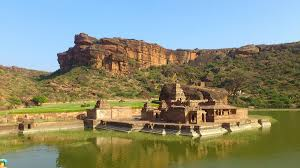
Badami Cave Temples in Karnataka form a stunning group of rock-cut cave temples in the town of Badami. This town once served as the capital of the Chalukya dynasty. Between the 6th and 8th centuries AD, artisans carved these caves into red sandstone cliffs. Moreover, the temples feature exquisite sculptures, detailed pillars, and beautiful reliefs linked to Hinduism and Jainism. Notably, the four main caves display powerful images of Lord Shiva as Nataraja, Lord Vishnu in various avatars, and Jain Tirthankaras. Overlooking the Agastya Lake, the caves create a dramatic and serene setting. Overall, the Badami Cave Temples showcase the early development of Indian rock-cut architecture and reflect the artistic brilliance and cultural richness of ancient Karnataka.
Architectural Excellence and Features
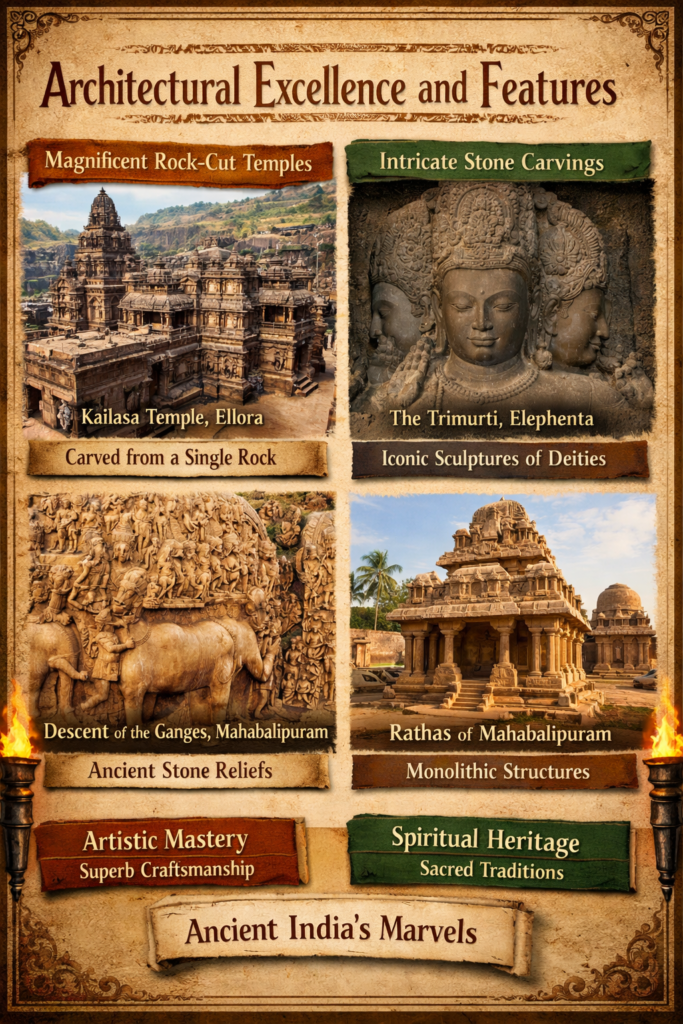
Rock-cut caves highlight the technical brilliance of ancient builders:
- Entire structures carved from a single rock
- Strong pillars and symmetrical halls
- Fine sculptures and detailed relief work
- Natural cooling through ventilation
- Excellent durability against weather and time
The precision with which these caves were carved proves that ancient craftsmen had advanced knowledge of geometry and engineering.
Cultural, Religious, and Artistic Importance
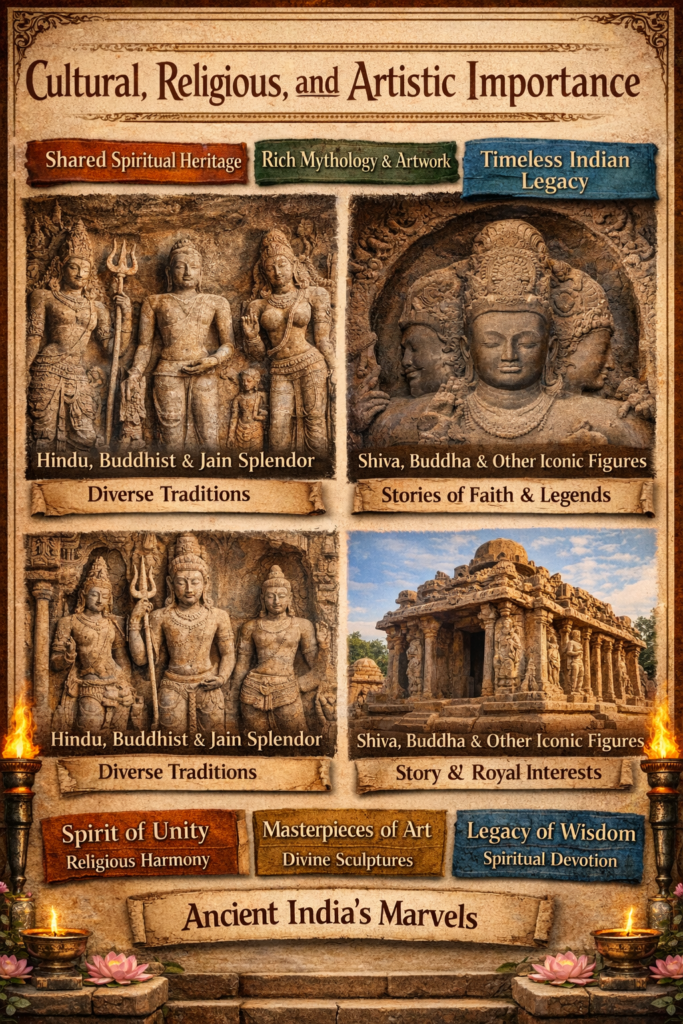
Firstly, cultural, religious, and artistic importance plays a vital role in understanding India’s rich heritage. In particular, this importance is clearly reflected in ancient rock-cut monuments and temples. Religiously, these sites express the deep spiritual beliefs of Hinduism, Buddhism, and Jainism. Moreover, they demonstrate centuries of religious harmony and shared cultural values.
Artistically, these monuments showcase exceptional craftsmanship through detailed sculptures, symbolic carvings, and mythological storytelling. Additionally, the precise stonework reveals advanced artistic skills and creative excellence. Culturally, these monuments served as important centers of worship, learning, and community life. As a result, they helped preserve traditions, beliefs, and historical narratives across generations.
Overall, the combined cultural, religious, and artistic significance represents the timeless legacy of Indian civilization. Therefore, these monuments continue to influence history, art, and spirituality even in the modern era.
Importance in the Modern World
Today, rock-cut caves are invaluable heritage sites. Firstly, they help us understand ancient civilizations and their way of life. Secondly, they preserve early forms of art and architecture, including sculptures, murals, and temple designs. Moreover, these caves promote tourism and increase cultural awareness by attracting visitors from around the world. In addition, many rock-cut caves are protected as UNESCO World Heritage Sites, which highlights their global importance.
Therefore, conserving these monuments is essential to protect India’s cultural heritage. By preserving them, we ensure that future generations can learn from and appreciate the artistic, religious, and historical achievements of ancient India.
Conclusion
Rock-cut caves are timeless reminders of human imagination, dedication, and devotion. Carved with simple tools yet unmatched precision, these monuments reflect the harmony between art, religion, and nature. As silent witnesses of the past, rock-cut caves continue to inspire awe and respect, making them treasures that must be preserved for future generations.
Royal India: Famous Forts and Palaces
Hidden Tourist Spots in South India
Hidden Historical Places in Tamizh Nadu with Deep Tamizh History
India Travel Tips: 8 Essential Tips for First-Time Visitors
