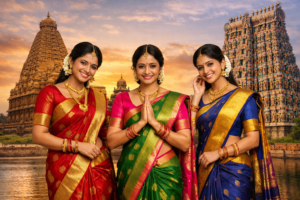
Introduction to Tamil Nadu Women Dress Culture
Tamil Nadu women dress culture reflects tradition and daily life. Women choose clothes based on climate and customs. Therefore, dress shows identity and respect. Cotton fabrics suit hot weather conditions. Moreover, women prefer comfort for daily activities. Sarees remain popular across generations. For example, women wear simple sarees at home. As a result, clothing supports culture and practicality. Traditional values guide every dressing choice.
Popular Types of Sarees in Tamil Nadu
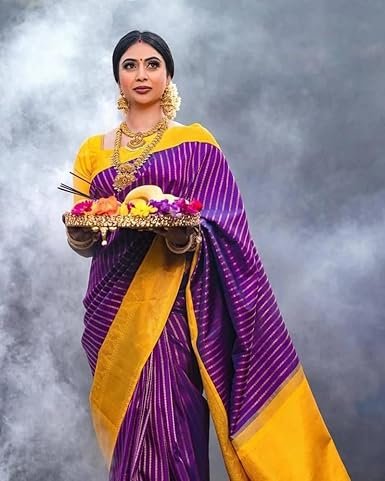
Kanchipuram silk sarees are world-famous for their rich silk texture and intricate zari work. These sarees are commonly worn during weddings and grand celebrations in Tamil Nadu. Crafted from pure mulberry silk with authentic gold or silver zari, they are known for their durability, vibrant colors, and traditional motifs inspired by temples, flowers, and mythology. Representing luxury and cultural heritage, Kanchipuram silk sarees are treasured garments often passed down through generations.These sarees are handwoven by skilled artisans using age-old techniques passed down through generations. The weaving process is time-intensive, ensuring strength, elegance, and fine detailing. Each Kanchipuram silk saree reflects exceptional craftsmanship and holds a special place in South Indian traditions and rituals.
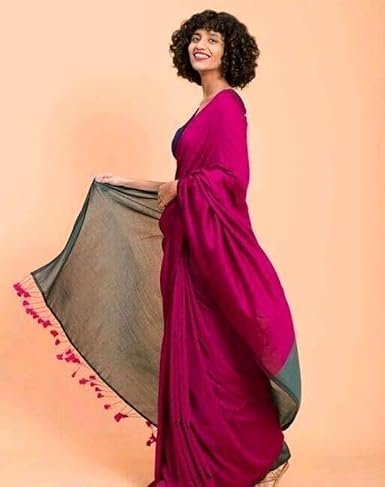
Sungudi sarees are traditional tie-and-dye cotton sarees mainly worn in Madurai and nearby regions. They are lightweight and suitable for daily wear.They are hand-crafted using age-old techniques that involve tying the fabric before dyeing to create unique designs. Sungudi sarees are valued for their softness, durability, and eco-friendly nature. Often worn during festivals and casual occasions, they represent simplicity, tradition, and everyday elegance.Traditionally made from pure cotton, Sungudi sarees are especially suited to hot and humid climates. The borders and pallu often feature simple yet elegant patterns that enhance their charm without being heavy.
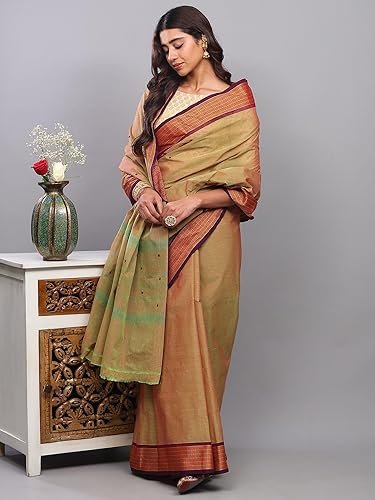
Chettinad sarees are known for their bold colors, checks, and stripes. They are comfortable and ideal for hot climatic conditions.Chettinad sarees are traditional cotton sarees from Tamil Nadu, known for their bold colors, checks, and stripes. Woven with thick cotton yarn, they are durable, breathable, and ideal for hot climatic conditions. These sarees feature distinctive contrast borders and earthy tones that add to their charm. Handloom weaving techniques highlight the skill of local artisans. Chettinad sarees beautifully combine comfort, simplicity, and cultural heritag
Coimbatore cotton sarees are soft, breathable, and perfect for everyday use.Made from high-quality cotton, they offer exceptional comfort throughout the day. These sarees are ideal for hot and humid weather conditions. Their simple designs and subtle color tones add a graceful look. They are lightweight and easy to drape. Coimbatore cotton sarees are also easy to maintain and long-lasting. They reflect the traditional handloom craftsmanship of Tamil Nadu.
Traditional Sarees and Fabrics
Traditional sarees define Tamil Nadu women dressing style. Cotton sarees support long working hours. Therefore, women wear them daily. Silk sarees mark festivals and weddings. For example, Kanchipuram silk shows richness. Moreover, bright colors suit celebrations. However, soft colors fit routine use. In addition, handloom work preserves heritage. As a result, fabrics connect women with tradition. Weavers pass skills through family generations.
Jewelry and Accessories
Jewelry completes Tamil Nadu women traditional appearance. Women wear gold jewelry during ceremonies. Therefore, jewelry shows status and blessings. For example, bangles and necklaces remain common. Moreover, women decorate hair with flowers. However, women choose light jewelry daily. In addition, accessories match saree colors. As a result, dressing looks graceful and meaningful. Footwear and handbags also support modern needs today.
Modern Influence on Dressing
Modern fashion influences Tamil Nadu women dressing today. Women mix tradition with modern styles. Therefore, fashion stays flexible and relevant. Many women prefer salwar suits. Moreover, kurtis pair well with jeans. However, sarees remain important for events. In addition, social media spreads new trends. As a result, women express individuality confidently. Cultural values still guide every clothing decision carefully.
Frequently Asked Questions (FAQ) – Tamil Nadu Women Dress Culture
1. What is the traditional dress of women in Tamil Nadu?
The saree is the most iconic and widely worn traditional dress of Tamil Nadu women. It is draped in various regional styles and made from fabrics ranging from everyday cotton to luxurious silk.
Women choose their sarees based on the occasion — lightweight cotton sarees for daily wear and work, and rich silk sarees such as the famous Kanchipuram for weddings, festivals, and ceremonies. The saree is not merely clothing in Tamil Nadu; it is a deep expression of cultural identity, grace, and tradition.
2. What makes Kanchipuram silk sarees so special and famous?
Kanchipuram silk sarees are world-renowned for their exceptional quality, rich texture, and intricate zari work crafted from pure mulberry silk with authentic gold or silver thread.
Each saree is handwoven by skilled artisans using age-old techniques passed down through generations, making every piece unique. Their vibrant colors, temple-inspired motifs, floral patterns, and remarkable durability make them a prized possession. Kanchipuram sarees are commonly worn at weddings and grand celebrations and are often treasured as heirlooms passed from mothers to daughters.
3. What are Sungudi sarees, and when are they typically worn?
Sungudi sarees are traditional tie-and-dye cotton sarees originating from the Madurai region of Tamil Nadu. They are hand-crafted using an ancient technique where the fabric is tied and then dyed to create distinctive and beautiful patterns.
Known for their softness, lightness, and eco-friendly nature, Sungudi sarees are a popular choice for festivals, casual occasions, and everyday elegance. Their breathable cotton fabric makes them especially well-suited to the hot and humid climate of Tamil Nadu, combining comfort with cultural charm.
4. What is unique about Chettinad cotton sarees?
Chettinad sarees are distinctive for their bold colors, geometric checks, and contrasting stripes that set them apart from other regional saree styles. Woven from thick cotton yarn using traditional handloom techniques, these sarees are durable, breathable, and highly comfortable in hot weather.
The earthy tones and strong contrast borders give Chettinad sarees a striking yet grounded aesthetic. They beautifully represent the cultural heritage of the Chettinad region while celebrating the skill and artistry of local Tamil Nadu weavers.
5. Why are cotton sarees preferred for daily wear in Tamil Nadu?
Tamil Nadu experiences a hot and humid climate throughout much of the year, making cotton the most practical and comfortable fabric for daily wear. Cotton sarees are lightweight, breathable, and easy to maintain, allowing women to go about their daily activities with ease and comfort.
Varieties like Coimbatore cotton sarees are especially valued for their softness, durability, and subtle elegance. Beyond practicality, wearing a cotton saree also reflects a deep cultural connection to the handloom traditions and textile heritage of Tamil Nadu.
6. What role does jewelry play in the traditional dress culture of Tamil Nadu women?
Jewelry is an essential and deeply meaningful part of Tamil Nadu women’s traditional appearance. Gold jewelry in particular holds great cultural and spiritual significance, and is commonly worn during religious ceremonies, weddings, and festive occasions as a symbol of prosperity and blessings.
Classic adornments include necklaces, bangles, earrings, and anklets, all carefully chosen to complement the saree being worn. Women also traditionally decorate their hair with fresh flowers such as jasmine, adding a finishing touch that is both elegant and deeply rooted in Tamil culture.
7. How has modern fashion influenced the dress culture of Tamil Nadu women?
Modern fashion has significantly influenced how Tamil Nadu women dress today, especially among younger generations in urban areas. Many women now blend traditional and contemporary styles, pairing kurtis with jeans, wearing salwar suits for work, or choosing fusion saree styles for special occasions. Social media and global fashion trends have accelerated this shift, giving women more freedom to express their individual style while still honoring cultural values.
Importantly, the saree remains a cherished garment for festivals, family events, and ceremonies, ensuring that tradition continues to coexist with modern fashion choices.
8. How does Tamil Nadu’s textile heritage connect to its cultural identity?
Tamil Nadu has one of India’s richest and most celebrated textile traditions, with handloom weaving deeply embedded in the state’s cultural and economic life. From the silk weavers of Kanchipuram to the cotton craftsmen of Coimbatore and Chettinad, skilled artisans have preserved ancient techniques across generations, making each fabric a living piece of cultural history.
For Tamil Nadu women, the act of choosing and wearing a traditionally crafted saree is far more than a fashion decision — it is a way of honouring their heritage, supporting local artisans, and maintaining a tangible connection to the values and identity of their community.
Click to read about Japanese Culture
Click to read about Korean Culture
Click to read about Indian Food
