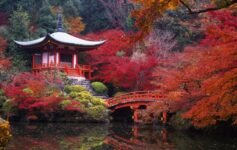
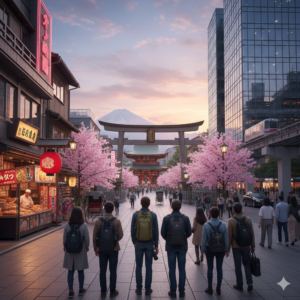
Japan is one of the most exciting travel destinations in the world. From neon-lit city streets to ancient temples and peaceful gardens, every Japanese city offers a unique experience. In this guide, we take you through 6 must-visit Japanese cities — Tokyo, Kyoto, Osaka, Nara, Hiroshima, and Sapporo — and highlight the top 5 places to explore in each one.
1. Tokyo — Where Tradition Meets the Future
Tokyo is Japan’s bustling capital and one of the world’s most dynamic cities. It blends ultra-modern skyscrapers with historic shrines, offering travellers an incredible mix of culture, food, technology, and entertainment — all in one place.

- Tokyo Tower 🗼 — Climb this iconic red-and-white landmark for sweeping panoramic views of the entire city skyline.
- Senso-ji Temple (Asakusa) ⛩️ — Walk through Tokyo’s oldest and most revered Buddhist temple, surrounded by traditional shops and lantern-lit gates.
- Shibuya Crossing 🚦 — Step into the world’s busiest pedestrian crossing, where thousands of people surge across the intersection every few minutes.
- Meiji Shrine 🌳 — Escape the city buzz and enter a serene forested shrine dedicated to Emperor Meiji, right in the heart of Tokyo.
- Tokyo Skytree 🌆 — Ride up to the observation deck of one of the tallest towers on earth for breathtaking views stretching to Mount Fuji on clear days.
2. Kyoto — The Soul of Traditional Japan
Kyoto served as Japan’s imperial capital for over a thousand years, and its heritage still shines brilliantly today. The city is home to thousands of temples, traditional tea houses, and stunning gardens that transport visitors back in time.

- Fushimi Inari Taisha ⛩️ — Hike through thousands of vibrant red torii gates winding up a sacred mountain — one of Japan’s most photographed sights.
- Kinkaku-ji (Golden Pavilion) 🏯 — Marvel at this stunning Zen temple sheathed entirely in gold leaf, perfectly reflected in the tranquil pond below.
- Arashiyama Bamboo Grove 🎋 — Stroll through towering stalks of bamboo that create an otherworldly canopy of green — a truly magical experience.
- Kiyomizu-dera Temple ⛩️ — Stand on the famous wooden stage of this UNESCO-listed temple and take in sweeping panoramic views over Kyoto’s rooftops.
- Gion District 👘 — Wander through cobblestone lanes lined with machiya townhouses, and spot geisha gracefully moving between tea house appointments.
3. Osaka — Japan’s Food and Fun Capital
Osaka is Japan’s most energetic and welcoming city, famous for its warm-hearted locals, world-class street food, and non-stop nightlife. Visitors flock here for the incredible food scene, exciting theme parks, and a lively urban culture that is entirely its own.
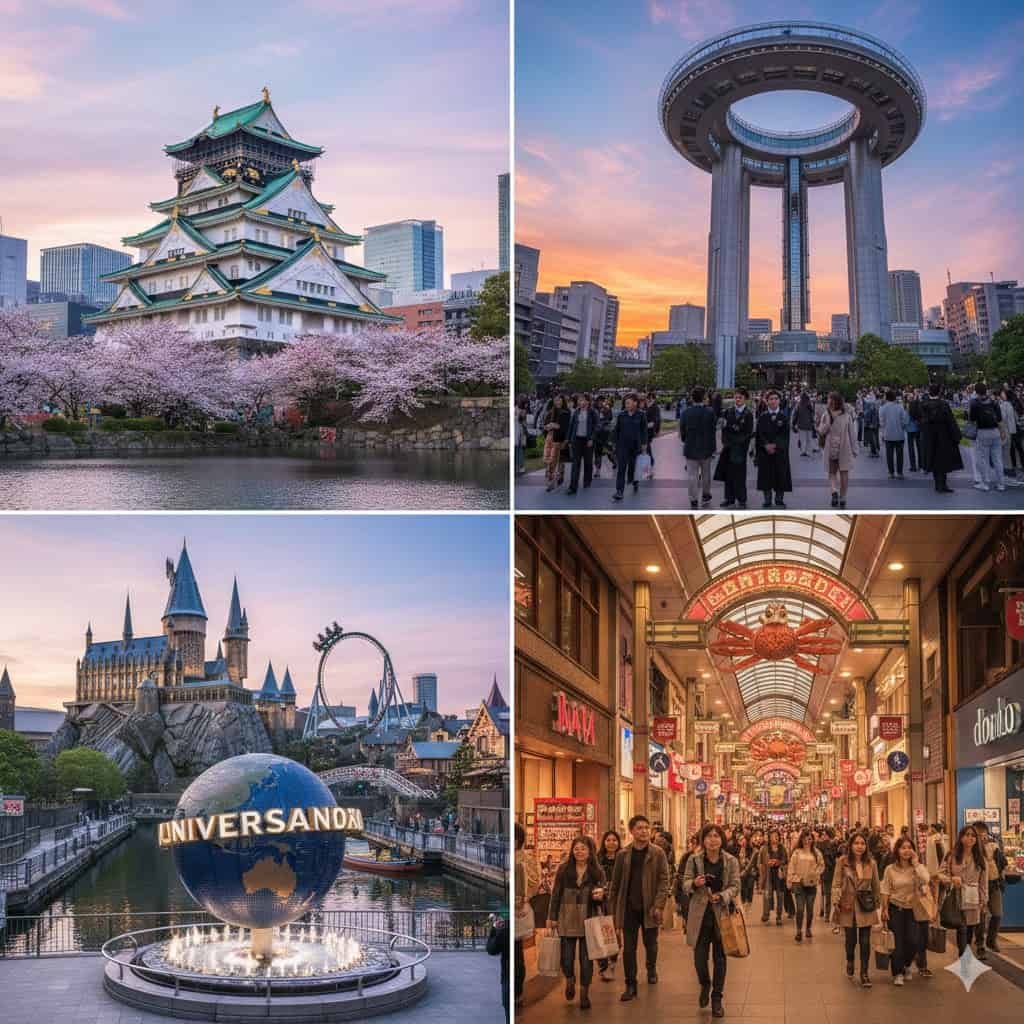
- Osaka Castle 🏯 — Explore this magnificent 16th-century fortress surrounded by cherry blossom trees and a scenic moat — a symbol of Osaka’s proud history.
- Dotonbori 🍜 — Dive into Osaka’s most famous entertainment strip, packed with dazzling neon signs, delicious takoyaki stalls, and buzzing nightlife.
- Universal Studios Japan (USJ) 🎢 — Enjoy world-class rides, live shows, and themed zones including the Wizarding World of Harry Potter at this iconic theme park.
- Shinsaibashi Shopping Street 🛍️ — Shop your way through Osaka’s longest and most popular covered arcade, offering everything from fashion boutiques to local snacks.
- Umeda Sky Building 🌆 — Ride to the futuristic Floating Garden Observatory and enjoy 360-degree panoramic views of Osaka’s sprawling cityscape.
4. Nara — Walk with Ancient Deer and Giant Buddhas
Nara was Japan’s very first permanent capital, and the city wears its ancient heritage with pride. Today, Nara is best known for its freely roaming sacred deer and some of Japan’s most awe-inspiring temples, shrines, and traditional gardens.
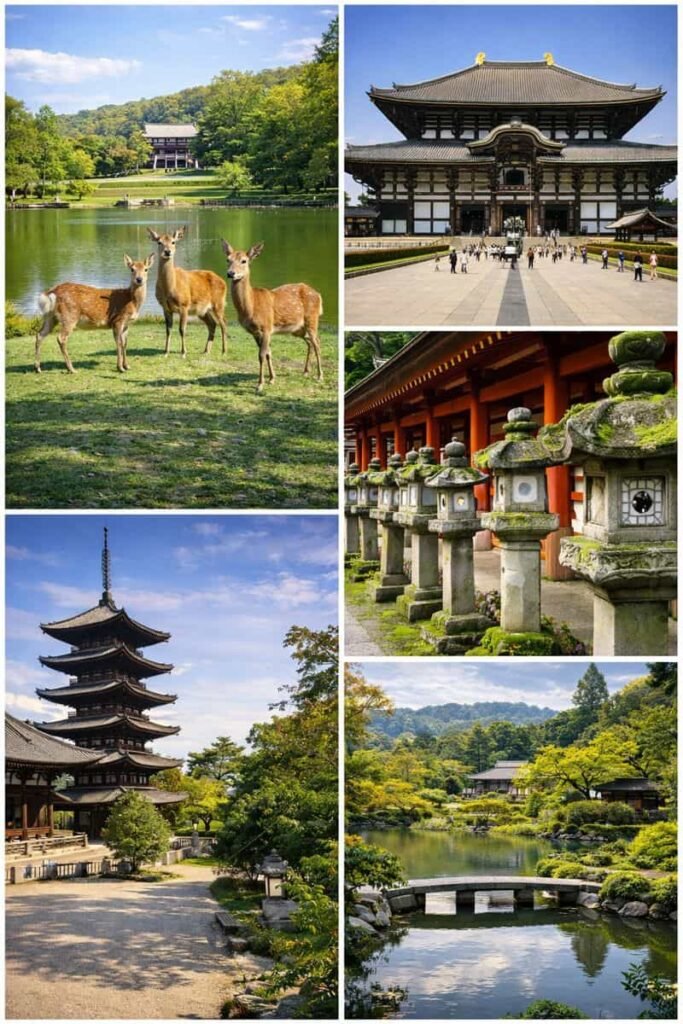
- Nara Park 🦌 — Hand-feed hundreds of friendly, free-roaming deer that have called this expansive park home for over a thousand years.
- Tōdai-ji Temple ⛩️ — Enter Japan’s largest wooden structure and stand face-to-face with the Great Buddha (Daibutsu), one of the country’s most impressive bronze statues.
- Kasuga Taisha Shrine 🏮 — Discover this atmospheric UNESCO-listed shrine, lined with thousands of stone and bronze lanterns that glow hauntingly at dusk.
- Kōfuku-ji Temple 🏯 — Admire the elegant five-story pagoda that has towered over Nara’s skyline for centuries and remains one of Japan’s finest historic structures.
- Isuien Garden 🌿 — Relax in this beautifully designed traditional garden, where meticulously arranged ponds, stones, and greenery frame views of Tōdai-ji in the background.
5. Hiroshima — A City of Peace, Resilience, and Beauty
Hiroshima is a city that carries profound history with remarkable grace. Once devastated by atomic bombing in 1945, Hiroshima has rebuilt itself into a thriving, beautiful city that now stands as a global symbol of peace, hope, and human resilience.
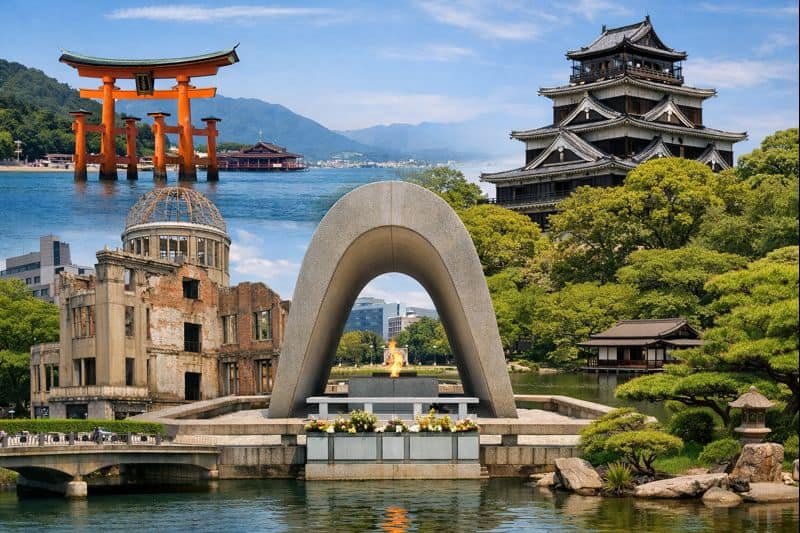
- Hiroshima Peace Memorial Park 🕊️ — Walk through this deeply moving park, dedicated to the memory of atomic bomb victims and the world’s ongoing pursuit of peace.
- Atomic Bomb Dome (Genbaku Dome) 🏛️ — Stand before this preserved UNESCO World Heritage ruin — the only structure that survived near the bomb’s hypocenter — now a powerful reminder of history.
- Itsukushima Shrine (Miyajima) ⛩️ — Take a short ferry ride to Miyajima Island and witness the iconic floating torii gate rising dramatically from the sea at high tide.
- Hiroshima Castle 🏯 — Tour this beautifully reconstructed feudal castle and learn about Hiroshima’s history before and after the war through its engaging exhibits.
- Shukkeien Garden 🌿 — Stroll through this centuries-old traditional Japanese garden near the city centre, designed around a central pond with miniature landscape features.
6. Sapporo — Japan’s Winter Wonderland City
Sapporo is the vibrant capital of Hokkaido, Japan’s northernmost main island. Known for its wide boulevards, crisp winters, world-famous beer, and the spectacular annual Snow Festival, Sapporo delivers a refreshingly different side of Japan that visitors absolutely love.
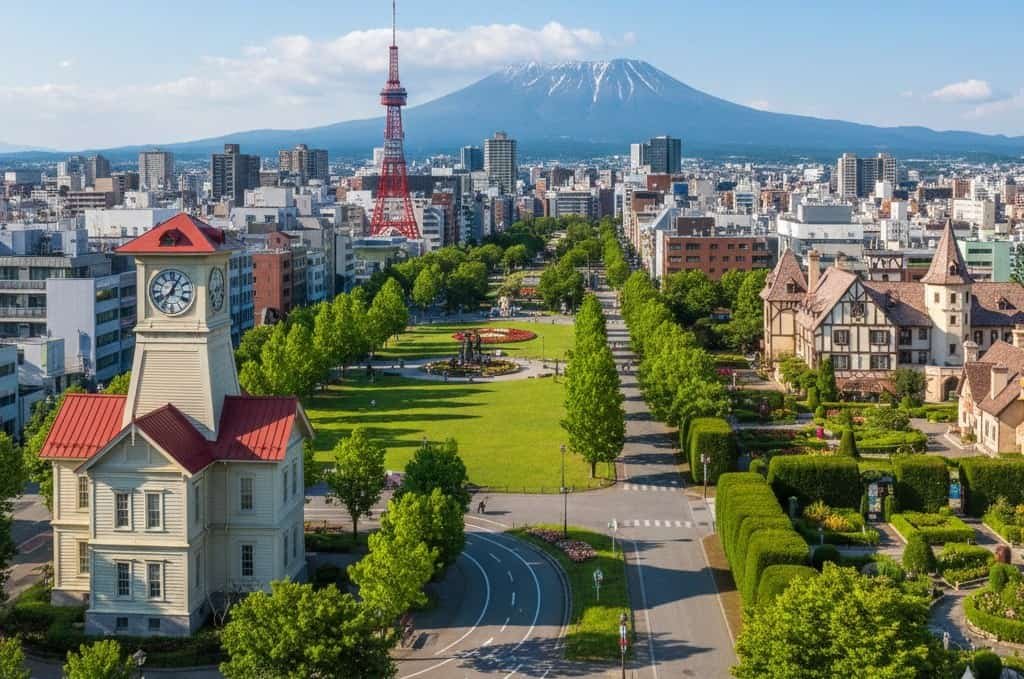
- Odori Park 🌳 — Explore this iconic central park that stretches through 12 blocks in the heart of the city, hosting the world-famous Sapporo Snow Festival every February.
- Sapporo Clock Tower 🕰️ — Visit Sapporo’s most beloved historic landmark, a 19th-century wooden building that has kept watch over the city for over 140 years.
- Sapporo TV Tower 🗼 — Take the lift to the observation deck and enjoy spectacular views of Odori Park stretching below and the mountain ranges beyond the city.
- Mt. Moiwa 🏔️ — Ride the ropeway to the summit and absorb one of Japan’s most celebrated night views — Sapporo’s lights glittering against the dark Hokkaido landscape.
- Shiroi Koibito Park 🍫 — Tour the charming chocolate-themed factory and park behind Sapporo’s most famous confectionery brand, a delightful experience for all ages.
Frequently Asked Questions (FAQs)
1. What is the best time of year to visit Japan?
Spring (March to May) and autumn (September to November) are the best times to visit Japan. In spring, cherry blossoms transform cities into pink wonderlands, while autumn brings stunning red and golden foliage. Summer offers festivals but can be hot and humid, and winter is perfect for snow experiences in cities like Sapporo.
2. Do I need a visa to travel to Japan?
Visa requirements depend on your nationality. Citizens of many countries — including the United States, United Kingdom, Australia, and most of Europe — can enter Japan visa-free for up to 90 days. Indian and some other passport holders need to apply for a tourist visa in advance through the Japanese Embassy in their country.
3. Is Japan an expensive country to travel in?
Japan suits a wide range of budgets. Budget travellers can get by on ₹3,000–₹5,000 per day (roughly $35–$60 USD) by using hostels, eating at convenience stores and ramen shops, and travelling by local trains.
Mid-range travellers spending on hotels, restaurants, and attractions typically spend $80–$150 USD per day. Buying a Japan Rail Pass in advance saves significant money on long-distance travel between cities.
4. How do I travel between cities in Japan?
The Shinkansen (bullet train) is the fastest, most comfortable, and most popular way to travel between Japan’s major cities. The Japan Rail Pass gives tourists unlimited access to most Shinkansen and JR trains across the country for 7, 14, or 21 days — making it excellent value for multi-city trips. Local subway and bus systems efficiently cover travel within each city.
5. Is it easy to get around Japan without speaking Japanese?
Yes, Japan is very tourist-friendly even without Japanese language skills. Major train stations, airports, and tourist attractions display signs in English.
Google Maps works reliably for navigation, and most hotel staff in cities speak basic English. Downloading a translation app like Google Translate with the Japanese language pack offline makes communication even easier.
6. What foods should I try when visiting these Japanese cities?
Each city has its own food speciality. While in Tokyo, try sushi and ramen. During visit to Kyoto, savour kaiseki (traditional multi-course cuisine) and matcha sweets. In Osaka — famous as Japan’s kitchen — don’t miss takoyaki (octopus balls) and okonomiyaki (savoury pancakes).
In Nara, try kakinoha-zushi (persimmon leaf sushi), in Hiroshima enjoy local-style oysters and Hiroshima-style okonomiyaki, and in Sapporo, savour rich miso ramen and fresh Hokkaido dairy products. Explore more at Japan’s Official Food Guide.
7. Are Japan’s tourist attractions suitable for families with children?
Absolutely. Japan is an outstanding family destination. Children love feeding the deer in Nara Park, exploring Universal Studios Japan in Osaka, visiting Shiroi Koibito Park in Sapporo, and riding to the top of Tokyo Skytree. Japan also has excellent public transport, clean facilities, and a very safe environment that makes travelling with kids stress-free.
8. What should I know about Japanese customs and etiquette before visiting?
Respecting local customs will greatly enrich your experience in Japan. Always remove your shoes when entering temples, traditional ryokan (inns), and some restaurants. Bow slightly when greeting people as a sign of respect. Avoid eating or drinking while walking in public. Keep your voice low on trains and in quiet spaces. Carry cash as many smaller shops and restaurants do not accept cards, and always use both hands when giving or receiving items as a sign of politeness. Read more at the Japan Tourism Agency’s official travel guide.
✈︎ જ⁀➴ ⛰︎💫🏮⛩️🏵🌿🇯🇵(˶ᵔ ᵕ ᵔ˶)Enjoy🤩
Visit our other Blogs on Japan
Backpackers Travel in Japan: Budget-Friendly Guide
Discover Japan: The Ultimate Guide to Iconic Cities, Timeless Culture, and Stunning Attractions
A Complete Guide to Traditional and Modern Dishes